Energy-Efficient Kitchen Appliances Buying Guide
Upgrading your kitchen appliances is one of the most effective ways to reduce household energy consumption while improving daily convenience. Modern appliances are designed to use less electricity and water without sacrificing performance, making them a smart investment for homeowners. This Energy-Efficient Kitchen Appliances Buying Guide will help you understand what features to look for, compare different appliance types, and make informed purchasing decisions. Whether you’re remodeling your kitchen or replacing outdated equipment, choosing energy-efficient models can lower utility bills and contribute to a more sustainable home.
Understand Energy Efficiency Ratings
Before purchasing any kitchen appliance, it’s important to understand energy efficiency ratings. These ratings indicate how much electricity or water an appliance consumes during regular use.
Many appliances include energy labels that compare their efficiency with similar models. Choosing highly rated products helps reduce operating costs over the appliance’s lifespan.
When comparing appliances, consider factors such as:
- Annual energy consumption
- Water usage
- Estimated yearly operating costs
- Performance ratings
- Warranty coverage
An appliance with a slightly higher purchase price may save hundreds of dollars in energy costs over several years.
Always compare long-term savings rather than focusing only on the initial cost.
Choose an Energy-Efficient Refrigerator
The refrigerator operates continuously, making it one of the largest energy consumers in most homes. Selecting an efficient model can significantly reduce electricity usage.
When shopping for a refrigerator, look for features such as:
- Inverter compressors
- Adjustable temperature controls
- LED interior lighting
- High-quality door seals
- Smart cooling technology
Choose a refrigerator size that fits your household’s needs. An oversized refrigerator uses more energy than necessary, while a smaller model may struggle to provide enough storage.
Proper placement also improves efficiency. Keep the refrigerator away from ovens, dishwashers, and direct sunlight to reduce its workload.
Select a Modern Dishwasher
Today’s dishwashers use far less water and electricity than older models while providing better cleaning performance.
Features worth considering include:
- Eco wash cycles
- Soil sensors
- Half-load settings
- Delayed start timers
- Adjustable racks
Running a dishwasher only when fully loaded maximizes efficiency and conserves both water and energy.
Air-drying dishes instead of using the heated drying cycle can further reduce electricity consumption.
Modern dishwashers also operate much more quietly, making them ideal for open-concept homes.
Invest in an Efficient Oven and Cooktop
Cooking appliances have improved significantly in recent years, offering better performance with lower energy usage.
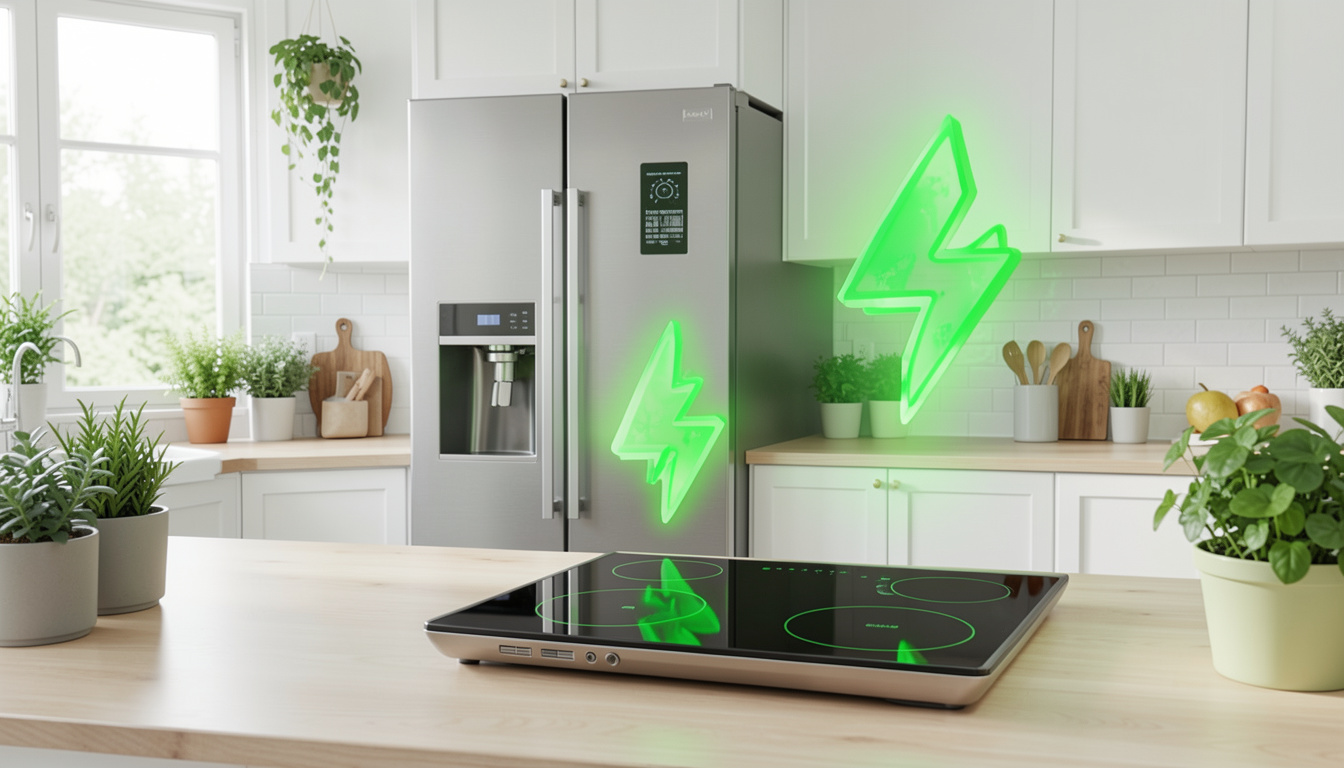
Induction cooktops are among the most energy-efficient options available because they heat cookware directly instead of warming the surrounding surface.
Benefits include:
- Faster cooking times
- Precise temperature control
- Improved safety
- Lower energy consumption
- Easier cleaning
Convection ovens also improve efficiency by circulating hot air evenly throughout the oven, allowing food to cook more quickly and at lower temperatures.
These appliances save both energy and valuable cooking time.
Consider Smart Appliance Features
Many modern kitchen appliances include smart technology that improves convenience while helping homeowners manage energy use.
Useful smart features include:
- Remote operation through mobile apps
- Energy usage monitoring
- Automatic maintenance alerts
- Voice control compatibility
- Scheduled operating times
For example, some dishwashers can automatically start during off-peak electricity hours, helping reduce energy costs.
Although smart appliances may cost more initially, they provide additional convenience and long-term savings.
Think Beyond the Purchase Price
Many buyers choose the least expensive appliance available, but this approach often leads to higher operating costs over time.
When comparing products, evaluate:
- Energy efficiency
- Durability
- Warranty length
- Maintenance requirements
- Repair availability
A high-quality appliance may last several years longer than a cheaper alternative while consuming significantly less electricity.
The total cost of ownership is often a better measure of value than the purchase price alone.
Investing wisely today can reduce expenses for many years.
Conclusion
This Energy-Efficient Kitchen Appliances Buying Guide highlights the importance of selecting appliances that combine performance, reliability, and energy savings. Refrigerators, dishwashers, ovens, and cooktops with modern efficiency features help reduce utility bills while supporting environmentally responsible living. By understanding energy ratings, choosing the right appliance size, and considering long-term operating costs, homeowners can make informed purchasing decisions that benefit both their household budget and the environment. Energy-efficient appliances are a valuable investment that delivers comfort, convenience, and savings for years to come.