Introduction
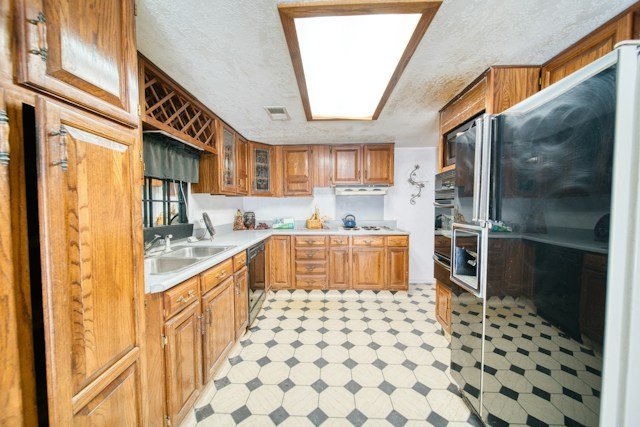
An outdated kitchen does not always need a complete demolition and expensive renovation.
Sometimes the cabinets are still sturdy, the appliances still work, and the layout is perfectly usable. The problem is simply that the room looks tired. Old cabinet colors, worn hardware, poor lighting, dated backsplashes, cluttered countertops, and aging fixtures can make a perfectly functional kitchen feel like it belongs to another era.
The good news is that you can often make a dramatic difference by improving the parts of the kitchen that have the biggest visual and practical impact.
A fresh cabinet finish, new handles, better lighting, a cleaner backsplash, or improved storage can completely change how a kitchen feels. This Old House recommends several of these approaches as alternatives to full cabinet replacement, including painting, refacing, pull-out shelves, under-cabinet lighting, and adding storage.
The key is to avoid spending money simply because something looks old. Instead, identify what makes the kitchen feel dated and concentrate your budget there.
Here are 10 practical ways to give an older kitchen a fresh, modern feel.
1. Give the Kitchen Cabinets a Fresh New Look
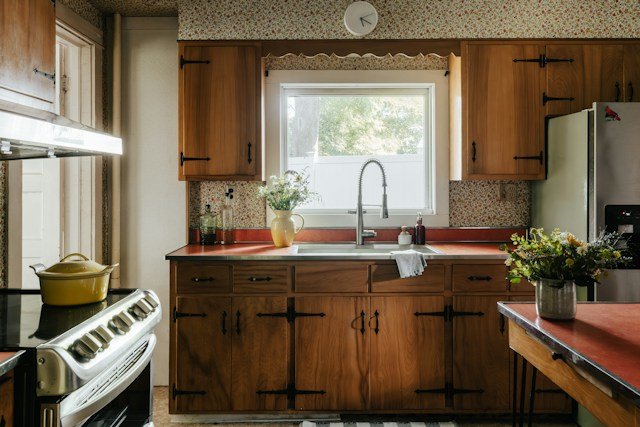
Cabinets usually occupy a large portion of a kitchen’s visible wall space, so changing them can have an immediate effect.
If the cabinet boxes are structurally sound and you like the existing layout, painting may be one of the simplest ways to transform the room. The Home Depot specifically recommends painting when the existing cabinet layout works and the cabinets are in good condition.
Depending on the style of your home, you might consider:
- Warm white
- Soft gray
- Cream
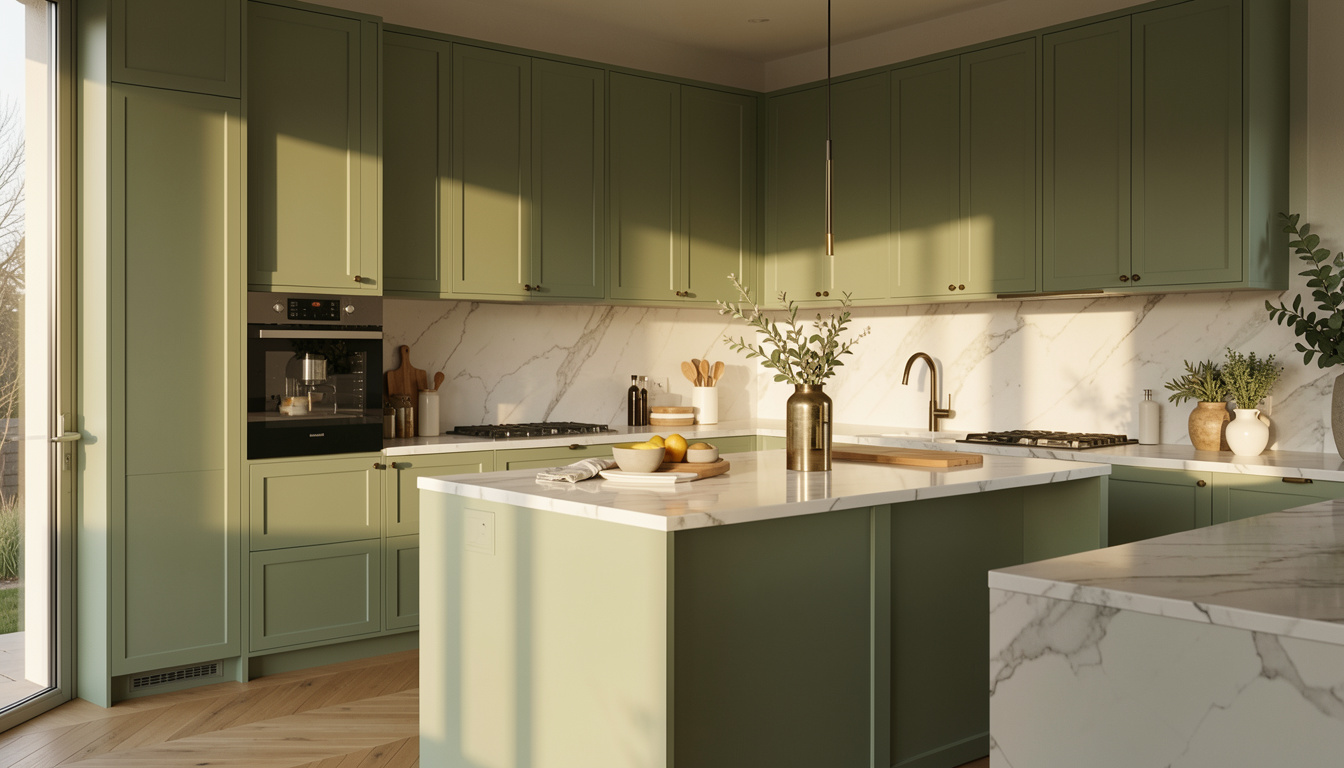
- Deep green
- Navy
- Natural wood tones
- Two-tone cabinets
A lighter finish can make a dark kitchen feel brighter, while a darker island can create a focal point.
However, preparation matters.
Do not simply paint over greasy or dirty cabinet surfaces. Proper cleaning, sanding, priming, and using a suitable cabinet paint can make a major difference in the final result. This Old House notes that careful preparation is essential when refinishing kitchen cabinets.
When painting is not enough
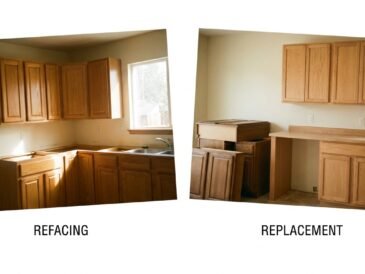
If you dislike the existing door style as well as the finish, consider cabinet refacing instead.
Refacing typically keeps the existing cabinet framework while updating the visible exterior, doors, and drawer fronts.
That can create a much bigger transformation without completely rebuilding the kitchen.
2. Replace Old Cabinet Hardware
Sometimes a kitchen looks outdated because of surprisingly small details.
Old brass knobs, worn handles, mismatched pulls, or damaged hinges can make cabinets look older than they actually are.
Replacing cabinet hardware is one of the easiest updates to consider.
You can choose hardware with a style that matches your new kitchen direction, such as:
- Simple bar pulls
- Round knobs
- Matte finishes
- Brushed metal
- Black hardware
- Traditional cup pulls
Before buying new hardware, measure the existing screw-hole spacing if you are replacing handles. This helps avoid unnecessary drilling and makes installation easier. The Home Depot’s current guide also recommends measuring existing hardware before purchasing replacements.
New hardware can be especially effective when combined with painted or refaced cabinets.
Think of it as changing the accessories after giving the room a new outfit.
3. Improve the Kitchen Lighting
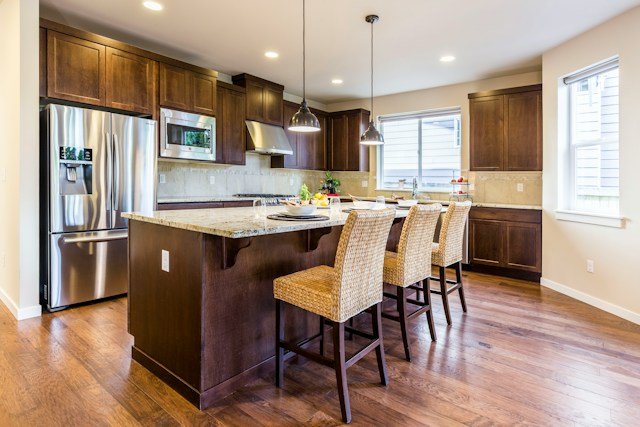
A kitchen can have beautiful cabinets and countertops but still feel old if the lighting is poor.
Older kitchens often depend heavily on a single ceiling fixture. That can create shadows on work surfaces and make the room feel darker than it needs to be.
Consider adding layers of lighting instead.
Under-cabinet lighting
Under-cabinet lights illuminate countertops where you actually prepare food. They can also add a warm evening atmosphere.
LED strips or other low-profile fixtures can be used depending on the cabinet configuration and electrical setup. This Old House identifies under-cabinet lighting as both a functional and aesthetic kitchen improvement.
Pendant lighting
If your kitchen has an island or peninsula, pendant lights can create a visual focal point.
Ceiling lighting
Replacing an outdated ceiling fixture can also make a noticeable difference.
You do not necessarily need the most expensive lighting. The goal is to eliminate dark areas and make the kitchen easier and more comfortable to use.
If electrical work is required, use a qualified professional where appropriate.
4. Update the Backsplash
A backsplash occupies a relatively small area compared with cabinets, but it can strongly influence the overall style of a kitchen.
If your backsplash has an old color, damaged tiles, or a pattern that no longer fits your home, replacing it can give the kitchen a more current appearance.
Popular design directions can include:
- Simple subway-style tile
- Neutral ceramic tile
- Large-format tile
- Natural stone
- Glass tile
- Textured tile
- Simple geometric patterns
You do not have to cover every wall with an elaborate design.
A clean, well-chosen backsplash can work as a bridge between the cabinets, countertops, and appliances.
If your budget is limited, focus on the area behind the range and the main countertop sections rather than automatically changing every surface.
5. Declutter and Improve Countertop Organization
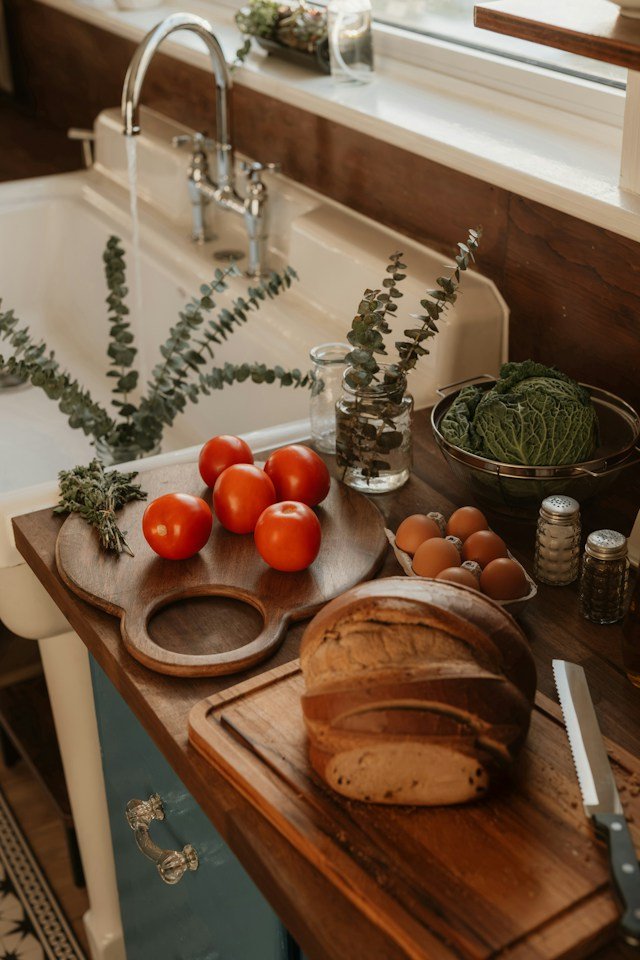
A kitchen can look outdated even when the finishes are reasonably modern.
Why?
Clutter.
Too many appliances, containers, utensils, papers, and miscellaneous items on the countertop can make the room feel crowded.
Start by removing everything that does not need to stay out.
Then organize what remains.
For example:
- Keep frequently used appliances accessible.
- Store rarely used equipment in cabinets.
- Use drawer organizers.
- Add a dedicated location for cooking utensils.
- Group everyday items together.
- Keep food-preparation areas clear.
This costs little or nothing, but it can dramatically change the appearance of the room.
A clean countertop also makes new lighting, cabinets, backsplash, and decorative features easier to notice.
6. Add Pull-Out Storage and Cabinet Organizers
An outdated kitchen is not only about appearance.
Sometimes the real problem is that the storage system is frustrating.
Deep base cabinets are a common example. Items stored toward the back can be difficult to reach, so homeowners often end up moving several things just to find one pan or container.
Pull-out shelves can make these spaces easier to use.
This Old House highlights pull-out cabinet shelves as a way to improve access to items stored toward the back of base cabinets.
Other useful additions include:
- Pull-out trash bins
- Spice organizers
- Drawer dividers
- Tray dividers
- Pan organizers
- Vertical storage
- Lazy Susans for suitable corner cabinets
These changes may not be immediately obvious in a photograph, but you will notice them every day.
A modern kitchen should not only look good. It should make everyday tasks easier.
7. Replace or Refresh the Countertops
If the cabinets look good but the countertops are visibly worn, updating them can help bring the entire room together.
You do not necessarily need the most expensive stone available.
The right countertop depends on your budget, cooking habits, maintenance preferences, and overall design.
Before choosing a material, consider:
- Heat resistance
- Stain resistance
- Scratch resistance
- Maintenance requirements
- Edge style
- Color
- Pattern
- Compatibility with the cabinets
If your existing countertop is still in good condition, do not replace it simply because you are updating other parts of the kitchen.
Sometimes cleaning, repairing, or improving the surrounding elements is enough.
The goal is to create a coordinated room rather than replace everything at once.
8. Modernize the Sink and Faucet
The sink is one of the most frequently used areas of the kitchen.
An old, stained sink or dated faucet can make the entire room feel older.
Replacing the faucet can be a relatively straightforward visual upgrade.
Depending on your needs, you might consider features such as:
- Pull-down spray
- Pull-out spray
- High-arc design
- Single-handle controls
- Touchless operation
- Better reach over the sink
If the sink itself is damaged or no longer works well, replacing it can create an even bigger improvement.
However, pay attention to the existing countertop opening and cabinet configuration before purchasing a replacement.
A new sink should fit the existing space or be planned as part of a larger countertop project.
9. Create a Focal Point
A kitchen does not need every surface to compete for attention.
One strong focal point can make the room feel intentionally designed.
Possible focal points include:
- A contrasting island
- Statement pendant lights
- A distinctive backsplash
- Open shelving
- A feature wall
- A beautiful range hood
- A carefully styled coffee station
For example, you could keep the perimeter cabinets neutral while giving the island a different color.
Or you could use simple cabinets and let the backsplash provide the visual interest.
The important thing is balance.
If every surface has a bold pattern or different finish, the kitchen can quickly become visually busy.
10. Add Finishing Details That Make the Kitchen Feel Personal
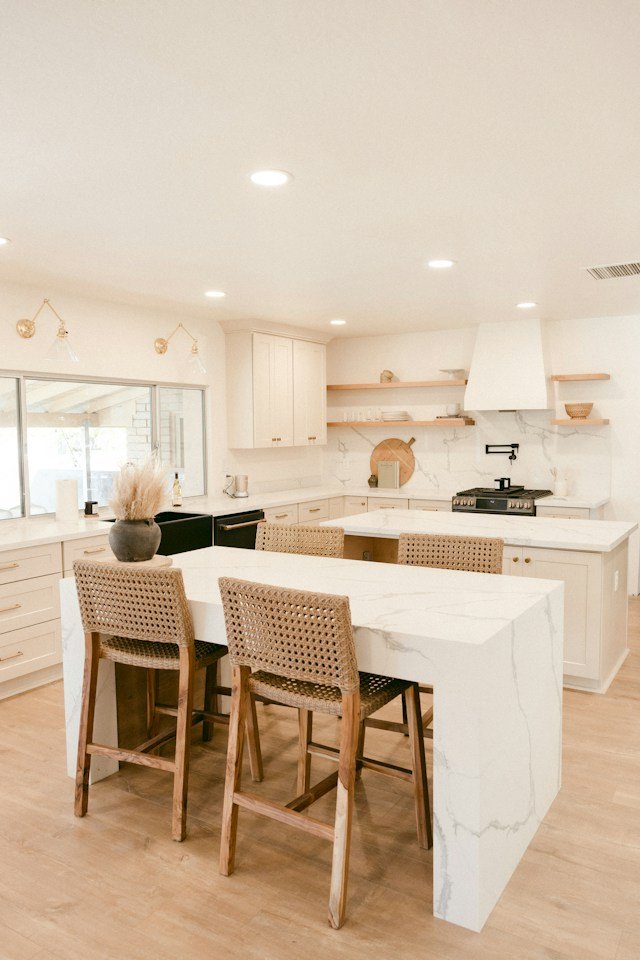
Once the major updates are complete, small finishing touches can make the space feel complete.
Consider adding:
- A simple runner
- A few plants
- Coordinated containers
- Wooden cutting boards
- Decorative shelves
- Artwork
- A small breakfast station
- New bar stools
- Matching storage containers
These details should support the kitchen rather than create more clutter.
Natural materials can also help soften a kitchen dominated by hard surfaces. A wooden cutting board, woven basket, plant, or simple fabric element can introduce warmth without requiring construction.
How to Decide Which Updates to Do First
You do not need to complete all 10 projects at the same time.
In fact, doing everything at once may not be the smartest approach.
Start with the problems that bother you most.
If the cabinets look old
Start with paint, refinishing, or refacing.
If the kitchen feels dark
Improve the lighting.
If the kitchen feels cluttered
Work on organization and storage.
If the kitchen looks visually disconnected
Coordinate the hardware, backsplash, lighting, and cabinet finish.
If the kitchen is difficult to use
Prioritize storage improvements and functional changes.
If the surfaces are genuinely damaged
Consider repairing or replacing the affected components.
This approach keeps the project focused and helps prevent unnecessary spending.
Should You Paint, Reface, or Replace the Cabinets?
This is an important decision when planning an outdated kitchen makeover.
Paint
Choose painting when:
- Cabinet boxes are sound.
- You like the existing door style.
- You mainly want a new color.
- You have a smaller budget.
Reface
Consider refacing when:
- Cabinet boxes are structurally sound.
- You dislike the existing doors.
- You want a major visual change.
- You want to keep the current layout.
Replace
Consider replacement when:
- Cabinets are badly damaged.
- Storage is inadequate.
- The layout does not work.
- You want to move appliances or cabinetry.
- Structural problems make the existing cabinets unsuitable.
Cabinet refacing can sit between painting and full replacement, providing a substantial visual update while retaining the existing cabinet framework.
A Budget-Friendly Kitchen Makeover Plan
If you are working with a limited budget, you can complete improvements in stages.
Stage 1: Clean and Declutter
Start with something inexpensive.
Remove unnecessary items, deep-clean the cabinets, organize drawers, and clear countertops.
Stage 2: Change Hardware
Replace outdated knobs and handles.
This can provide an immediate visual improvement.
Stage 3: Improve Lighting
Add practical under-cabinet lighting or replace outdated fixtures.
Stage 4: Refresh the Cabinets
Paint or refinish them if their condition allows.
Stage 5: Upgrade One Major Feature
Choose one feature such as the backsplash, countertop, sink, or faucet.
Stage 6: Add Decorative Finishing Touches
Complete the space with carefully selected accessories.
This staged approach allows you to improve the kitchen without taking on the financial burden of a complete renovation all at once.
When a Full Kitchen Remodel Is the Better Choice
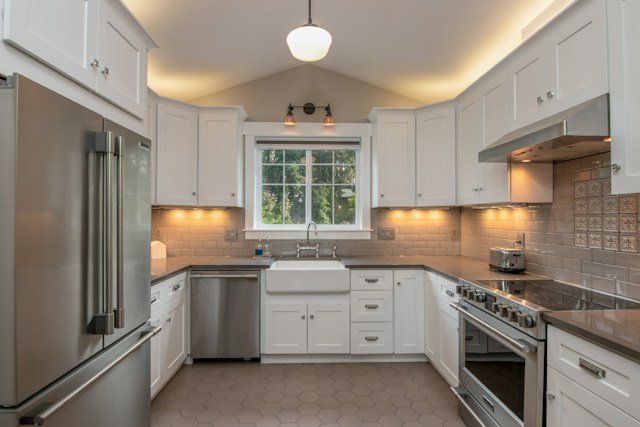
Cosmetic improvements are useful, but they cannot solve every problem.
A larger renovation may be appropriate if your kitchen has:
- Serious water damage
- Unsafe electrical systems
- Major plumbing problems
- Poor traffic flow
- Insufficient storage
- Very limited countertop space
- Structural problems
- Appliances that need major changes
- A layout that does not fit your household
A recent This Old House kitchen makeover illustrates how changing the layout, wall configuration, amenities, and storage can address functional problems that cosmetic improvements alone cannot solve.
The important distinction is between a kitchen that looks outdated and one that does not work for your needs.
The first may only need targeted improvements.
The second may require a more comprehensive renovation.
Common Mistakes to Avoid
Changing Everything at Once
You may spend far more than necessary by replacing perfectly functional components.
Choosing Trends Over Function
A design that looks fashionable today should still be practical for everyday use.
Ignoring Preparation
Poor cabinet preparation can lead to disappointing paint or refinishing results.
Adding Too Many Colors
Choose a coordinated palette rather than giving every component a different finish.
Forgetting About Lighting
A beautiful kitchen can still feel uncomfortable if work surfaces are poorly illuminated.
Buying Hardware Without Measuring
Always check hole spacing before ordering replacement handles.
Creating More Clutter
Decor should enhance the kitchen, not make the work surfaces harder to use.
Frequently Asked Questions
Can I make an old kitchen look modern without replacing the cabinets?
Yes. Painting, refinishing, refacing, new hardware, improved lighting, storage upgrades, and a new backsplash can significantly change the appearance of an existing kitchen.
What is the cheapest way to update an outdated kitchen?
Cleaning and decluttering cost very little, while changing cabinet hardware and painting cabinets can provide substantial visual improvements without the cost of complete cabinet replacement.
Does painting kitchen cabinets really make a difference?
Yes. Cabinets occupy a large amount of visual space, so changing their color can alter the overall appearance of the kitchen. Proper preparation is important for a durable finish.
How can I make a small kitchen feel newer?
Focus on lighting, uncluttered countertops, organized storage, appropriate cabinet colors, and carefully selected hardware. A lighter or brighter overall palette can also change how the space feels.
Should I replace my backsplash or countertops first?
There is no universal rule. If the countertops are damaged, they may deserve priority. If they are in good condition, a backsplash or cabinet update may provide more noticeable improvement for your budget.
How often should kitchen cabinets be updated?
There is no fixed schedule. Cabinets should be updated when their condition, appearance, functionality, or your household’s needs justify the investment.
Final Thoughts
An outdated kitchen does not automatically require a complete renovation.
In many cases, the biggest transformation comes from a series of focused improvements rather than one enormous project. Fresh cabinet finishes, updated hardware, better lighting, improved storage, a cleaner backsplash, and thoughtful accessories can make an older kitchen feel considerably fresher.
Start by identifying what actually bothers you about the room.
If the cabinets look tired, refresh them. If the room feels dark, improve the lighting. If storage is frustrating, add organizers. If the kitchen feels cluttered, simplify the countertops.
Most importantly, do not renovate simply for the sake of making everything new.
A successful kitchen makeover should make the space look better, work better, and feel better to use every day.